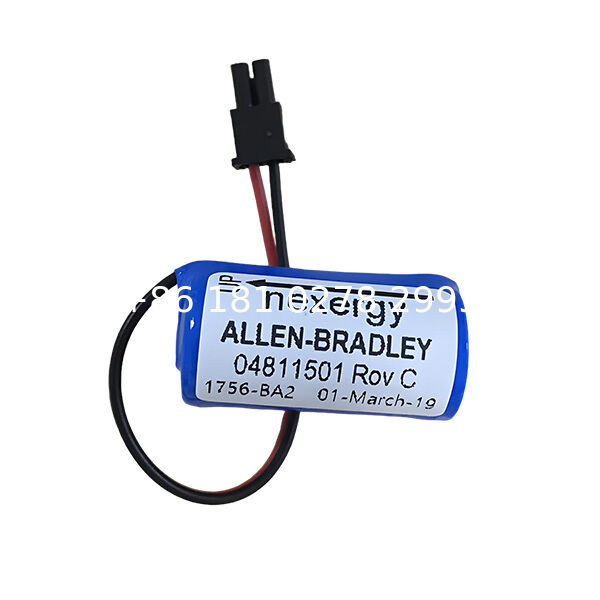
This specification data ensures that system designers and maintenance personnel can select, install, and maintain the battery confidently, knowing that it meets the requirements of demanding automation environments.
Installation and Replacement Considerations
Installing the 1756‑BA2 is a straightforward process. The battery is mounted in a designated battery holder within the controller chassis or directly in the controller module, depending on the hardware version. Proper orientation is essential to avoid connection issues, and clear documentation and markings are provided to guide installation.
Replacement intervals are generally based on either time or diagnostics. Many 1756‑series controllers monitor battery status and generate a minor fault or warning when the battery voltage drops below a safe threshold. Maintenance technicians can then schedule replacement during a planned maintenance window, minimising unexpected shutdowns.
Hot‑swap replacement is one of the biggest advantages of this battery system. Since the controller can remain powered during replacement, there is no interruption to production, and memory retention is maintained throughout the process. This feature is especially valuable in continuous‑process industries where even short stops can result in significant production losses.
Benefits to Industrial Operations
The 1756‑BA2 battery offers a number of operational advantages:
-
Reliability of Program Retention – Maintains controller memory during loss of external power.
-
Reduced Downtime – Hot‑swap capability allows replacement without halting production.
-
Predictable Maintenance – Clear replacement schedules and controller diagnostics help avoid unexpected failures.
-
Compact and Simple Design – Easy to handle and install, minimising technician training time.
-
Long Shelf Life – Ideal for spare‑parts inventory management.
These benefits make the battery an integral part of any preventive maintenance strategy for 1756‑based control systems.
Application Scenarios
While batteries are used in virtually all installations of this controller family, certain environments highlight the importance of reliable memory backup even more clearly:
-
Remote or Unmanned Facilities – Water treatment plants, pumping stations, and offshore installations often experience power interruptions and depend on reliable memory retention.
-
Batch Processing Plants – In industries such as food and beverage or specialty chemicals, losing a program could mean requalification of the process, which is expensive and time‑consuming.
-
Critical Control Systems – Power generation, safety systems, and critical infrastructure cannot afford data loss during outages.
In each of these scenarios, the 1756‑BA2 provides confidence that the controller will restart with the correct program and data intact once power is restored.
Maintenance Strategy and Lifecycle Management
A good maintenance program should include periodic inspection of battery health. Many plants establish an annual or bi‑annual preventive maintenance schedule that includes checking battery status in all controllers.
Best practices for managing 1756‑BA2 batteries include:
-
Maintaining a log of installation dates and expected replacement dates.
-
Storing spare batteries in a cool, dry place to maximise shelf life.
-
Using only genuine batteries from the original manufacturer to ensure proper fit, electrical characteristics, and compliance with certifications.
-
Disposing of used batteries according to local regulations, as lithium batteries require special handling.
Lifecycle planning should also account for system expansions, as additional controllers will require additional batteries. Stocking spares in advance helps avoid delays during commissioning or emergencies.
Environmental and Safety Considerations
Lithium batteries, while safe when properly handled, do pose potential hazards if exposed to extreme heat, puncture, or short circuit. Handling and disposal instructions are provided to minimise risk. Personnel should follow all applicable standards for battery disposal, including recycling where available.
The battery’s compliance with RoHS and CE standards ensures it meets global environmental and safety requirements. This makes it suitable for use in systems deployed worldwide without additional certification efforts.
Conclusion
Though small in size, the 1756‑BA2 lithium battery is a vital component in the reliable operation of 1756‑series control systems. Its long life, hot‑swap capability, and proven performance make it indispensable for industries that require uninterrupted control and memory retention. From discrete manufacturing lines to process plants and critical infrastructure, this battery ensures that programs and data are safeguarded, protecting productivity and reducing costly downtime.
Organisations that implement a proper maintenance strategy for the 1756‑BA2 can expect years of dependable service and predictable performance, aligning with the overall goals of operational efficiency and system reliability.

 Your message must be between 20-3,000 characters!